04 / Ground
The gardens make space for the quiet.
Native textures, fragrant herbs and pale paths give the resort a second rhythm away from the pool. The planting is designed to look generous without demanding tropical levels of water.
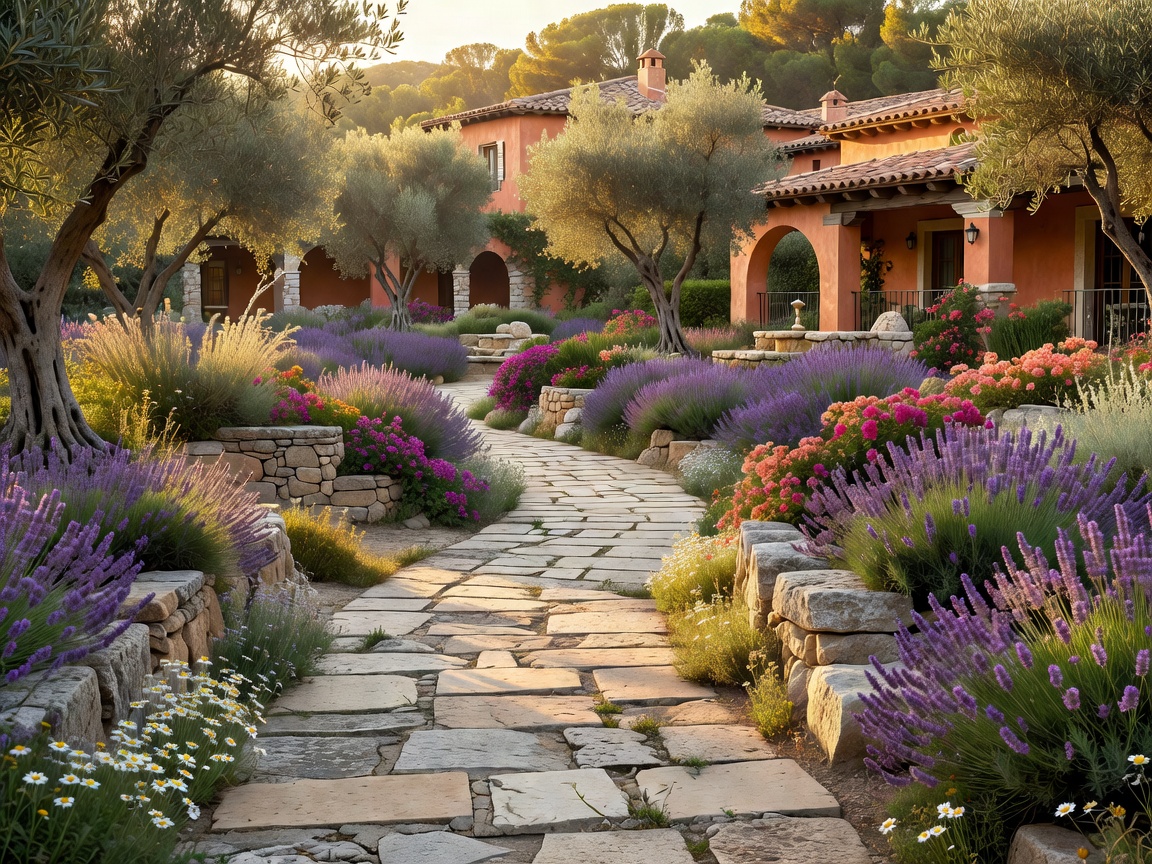
Planting with a purpose
Expect olive, citrus, rosemary, lavender, agave and other drought-tolerant species suited to the Algarve’s dry summers. These plants bring scent and movement without creating a wall between guests and the landscape. Seasonal flowers add colour, while native grasses soften the edges of terraces and paths.
The garden’s practical role is just as important. Trees provide pockets of shade, planting helps reduce glare from stone surfaces and permeable areas allow rain to move through the site. Irrigation is most effective early or late in the day, when evaporation is lower. Guests may notice that some planting looks intentionally informal; that is part of a lower-water approach rather than a lack of maintenance.
How to use the space
Morning is ideal for walking the full loop before the heat builds. In the afternoon, seek the deeper shade near mature trees or the edges of the lower terraces. Fragrant herbs are most noticeable after watering or a warm breeze. Take care on gravel paths, especially with sandals, and use marked routes after dark.
Families can use the gardens as a calm break between pool sessions, while photographers will find better texture in side light than in the harsh middle of the day. The garden is not a formal botanical collection, so labels may be limited. The team can usually identify the main species and explain which plants are edible, aromatic or purely ornamental.
Benefits and trade-offs
- Benefit: shade, privacy and a cooler walking route between buildings.
- Trade-off: natural planting may attract bees and other insects; avoid disturbing them.
- Best moment: the hour before dinner, when the stone holds warmth and the light turns amber.
Good resort landscaping should not compete with the coast. Here, it works as a transition: a textured foreground that makes the distant sea feel even more open.